Service Boss builds fast, research-backed websites for service businesses that need more than a prettier homepage. Every site starts with market analysis, competitor research, and a written strategy behind the decisions.
Your kitchen or bath deserves more than a contractor who disappears after demo day. Master craftsmen who answer the phone, hit the schedule, and leave behind work you'll point to for decades.
You pictured a new kitchen by Thanksgiving. Demo happened fast — then the momentum went with it. Suddenly you're washing dishes in the bathroom sink and waiting on a contractor who answers every third call.
Performance, speed, and strategy are the three things that separate a site that converts from one that just exists. Most service businesses are underperforming on all three — and they can't see it happening, because the website still loads and still has their phone number on it.
Speed compounds quickly. In our audits, slow mobile load times consistently show up as one of the easiest ways service businesses lose qualified visitors before the page has a chance to convert.
Performance is the floor. Strategy is the difference.
Every common way of building a service business website lands below Google's "good" threshold. We start above it — and put it in writing.
Every Service Boss engagement produces three things: a strategic brand report, a website built around it, and a website strategy report documenting how the live site connects back to the research. All grounded in research. All signed off by a person. All delivered the same week.
A 15+ page PDF mapping your market, your competitors, and the strategic decisions your site needs to make. Yours to keep.
A custom-coded site — not a template — engineered to clear Google's "good" performance threshold the day it launches.
A PDF with a strategic overview and one breakdown page per homepage section, pairing live screenshots with the reasoning behind the build.
| Business | Rating | Reviews | Web | Digital | Rep |
|---|---|---|---|---|---|
| 4.7★ | 184 | Solid | 6.2 | 7.8 | |
| 4.9★ | 412 | Strong | 8.4 | 9.1 | |
| 4.5★ | 267 | Dated | 5.6 | 6.9 | |
| 4.3★ | 98 | Weak | 3.8 | 5.2 |
Understanding who the business is trying to reach — and what drives their decisions — shapes every word on the website and every trust signal we build.
Based on Eugene Schwartz's Breakthrough Advertising framework, we map where the customer's awareness sits — and whether the current messaging meets them there.
Before a line of code is written, we run a deep research pass on your business and three to five of your closest competitors — their reviews, their sites, their ads, their positioning. The findings become your brand strategy report.
It is the reason every decision on your site has a reason. It is the document you keep referencing long after launch. The pages to the left are from a real report — the structure we use for every client. The specifics are redacted because the specifics are yours.
The build moves through six phases — strategy, architecture, copy, code, performance audit, visual review — each grounded in the brand report above. Every word is there for a reason.
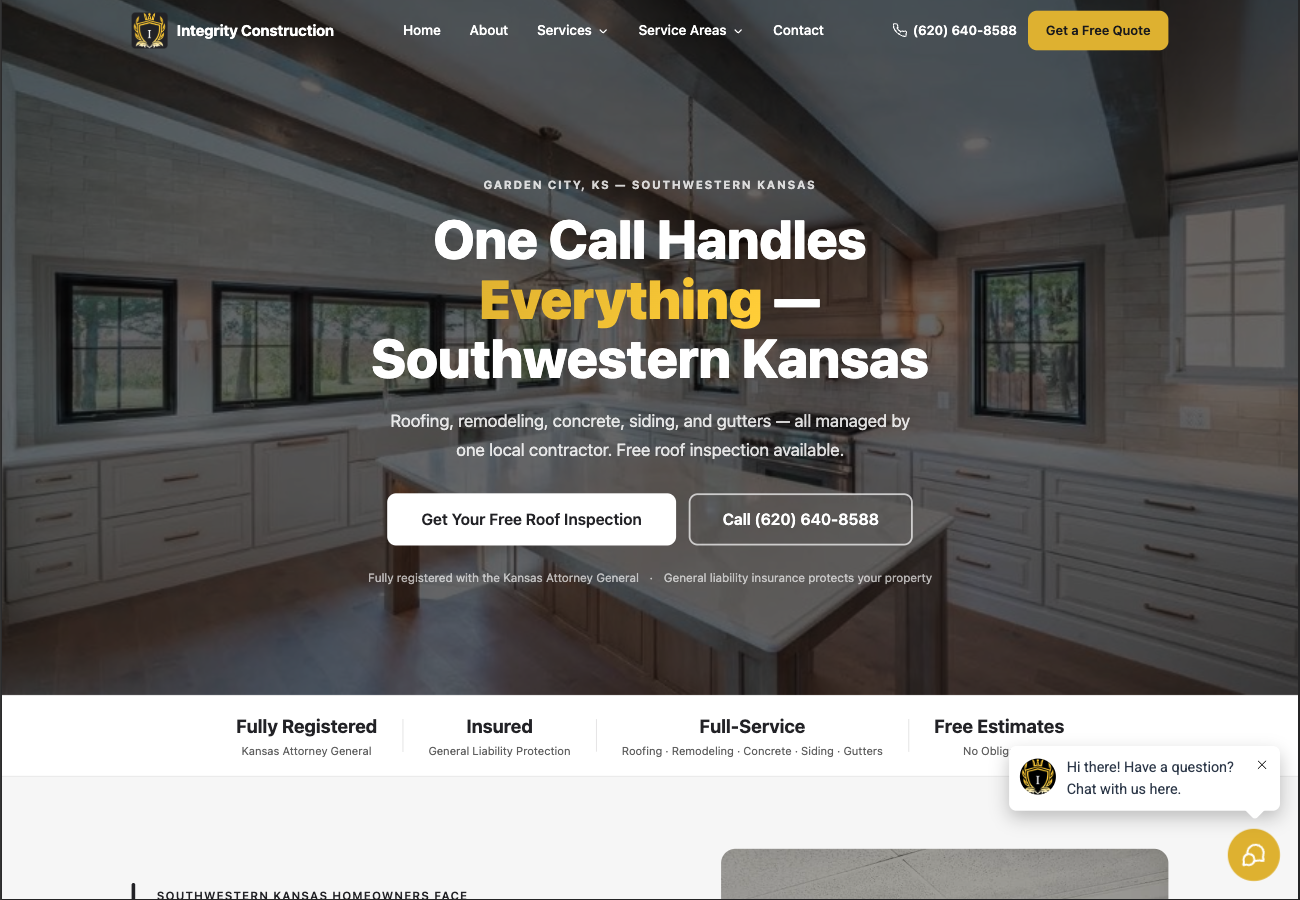
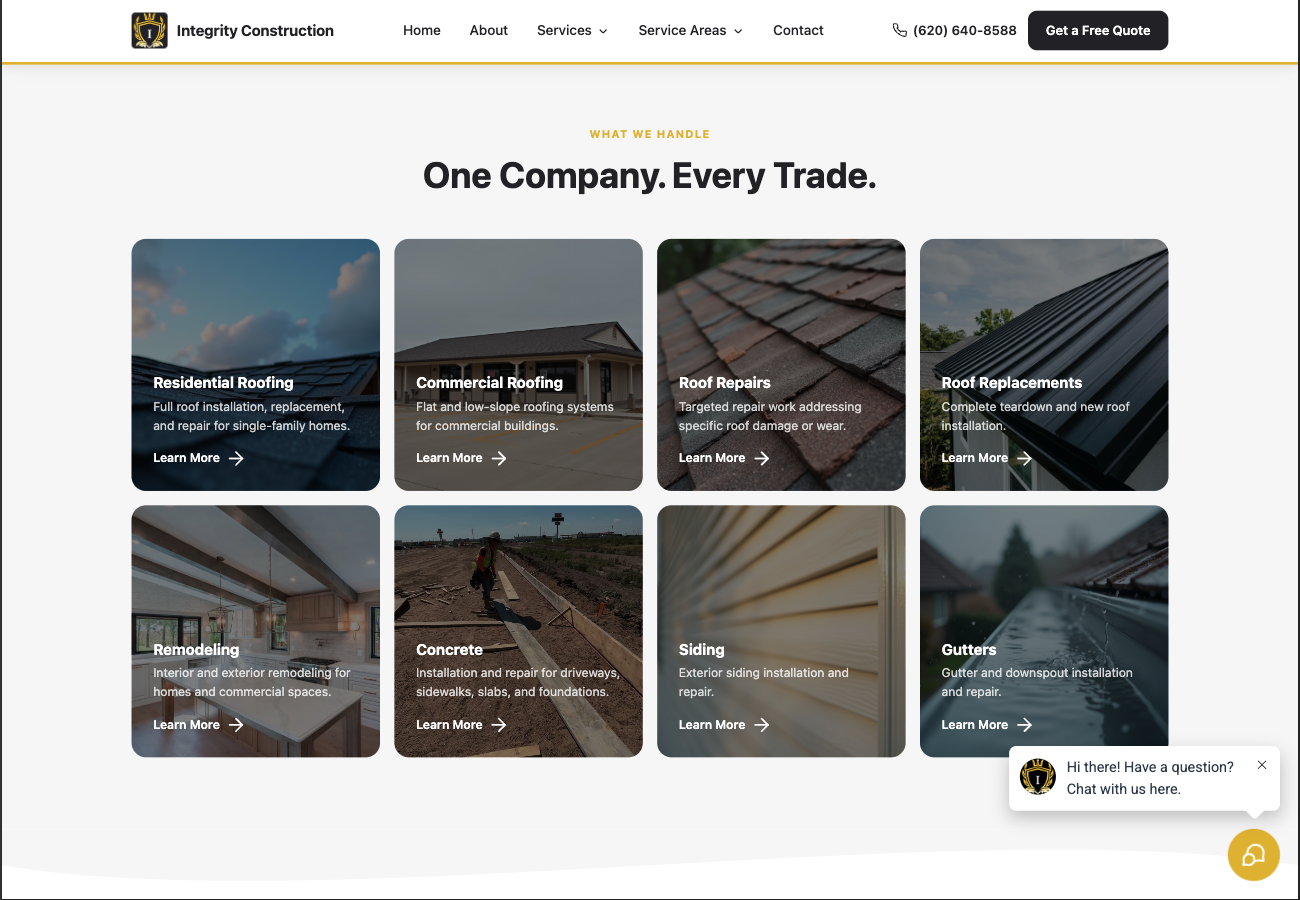
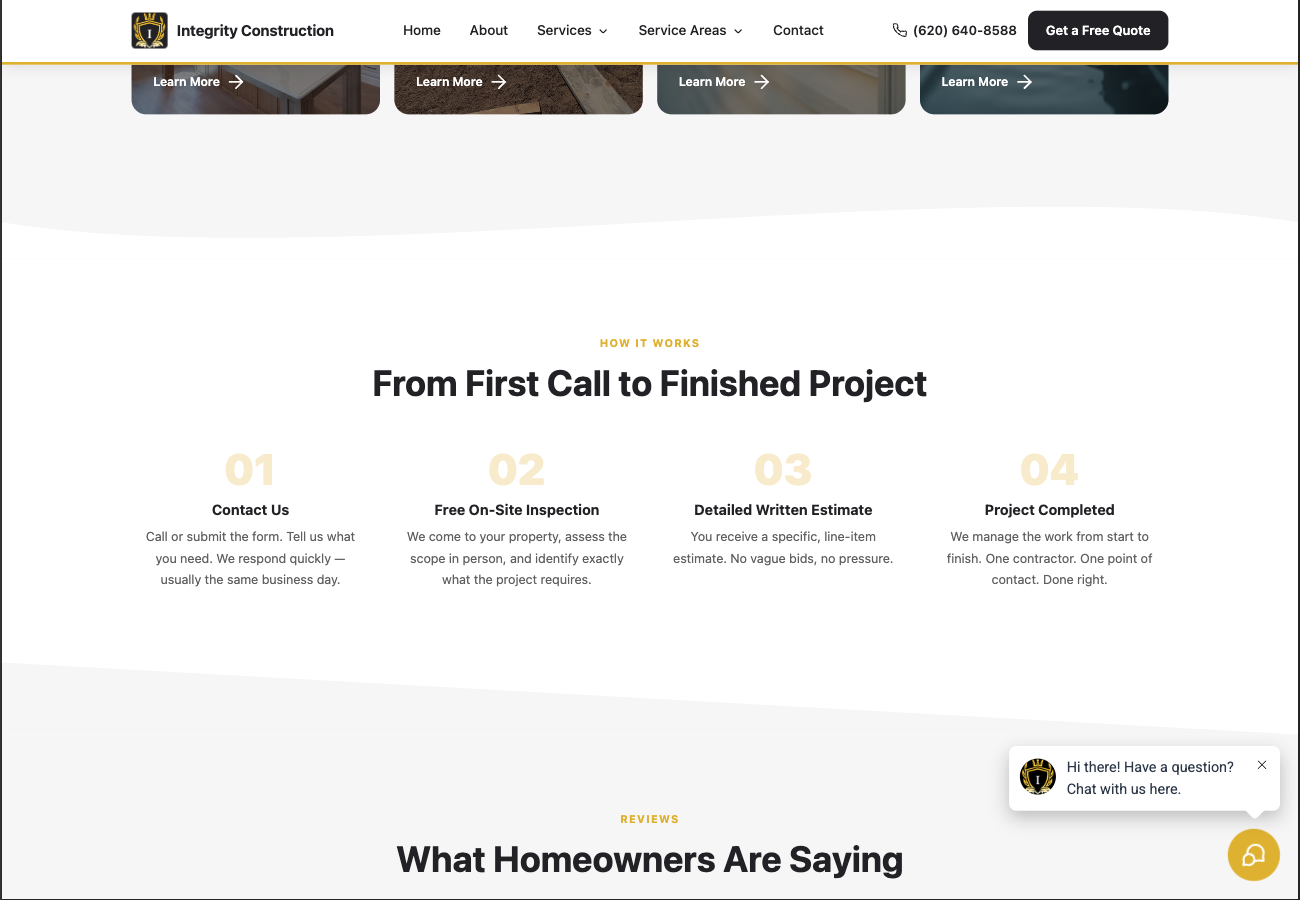
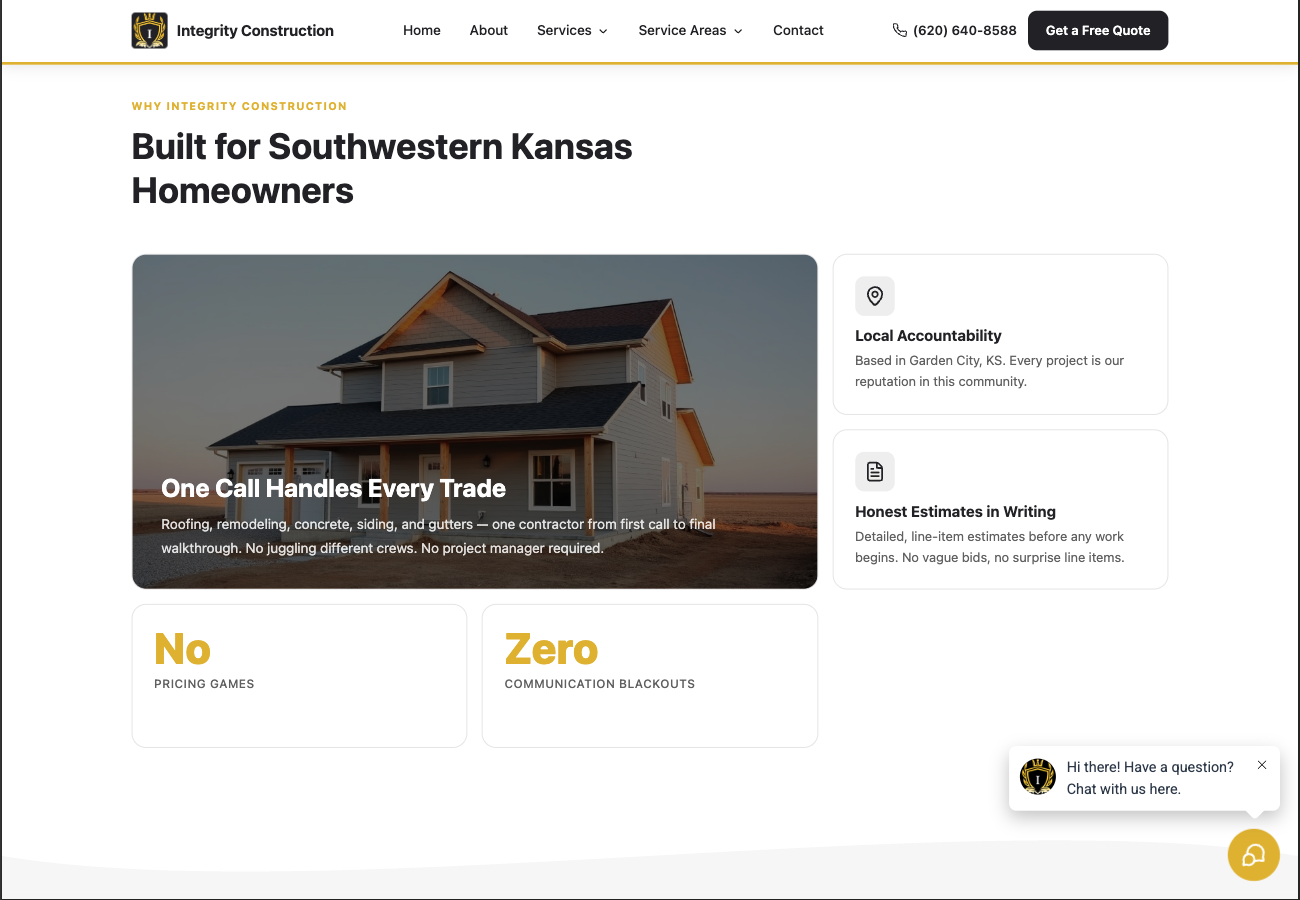
Brand analysis, competitor research, conversion-driven copy, and a code-built website for a local home services company. Every section informed by real market data — not a template.
After launch, you receive a website strategy report built from the same structure we use internally: overview first, then one breakdown page for each homepage section.
Each section page pairs a screenshot of the finished site with the timing, reasoning, key page elements, conversion callout, and source references that informed the build.
One clear price. No hidden fees. Everything you need to launch a website that actually works.
Covers hosting, technical maintenance, forms, calendar, chat, security, and monitoring.
Most clients add growth services within 60 days. Because once the foundation is converting, the next step is driving traffic to it.
Scoped during your brand analysis conversation.
Tell us what the business does, where growth is stuck, and what the site needs to accomplish. We’ll start with the research.
Start a conversation